We haven't had the time to talk about the methods and topics for future meetings and I would like to encourage you to share your ideas in the comment section of this blog entry.
Remember that the methods have to be compatible with the main characteristics of our meetings, which have to be:
1) interactive (so that everyone gets some opportunity to talk and engage with each other),
2) work-related (so that you end up feeling more comfortable speaking English in all sorts of working situations),
3) based on your initiative (so that you put in some effort into preparations and after-lesson activity.
What do you suggest?
Thursday, November 4, 2010

Monday, October 25, 2010
Strong start
I enjoyed our first class today and found doing a lesson in your natural working environment a very good idea.
A few things either escaped my mind or I simply didn't know them.
The opposite of thick or dense is sparse or light. For example:
This area is densly populated. This area is sparsely populated.
When something becomes denser and denser it thickens.
Przysposobienie ochronne = civil defense training
To prevent tilt in the melioration unit, you are building a self-leveling system or, more precisely, a self-leveling suspension. Can you check me on that?
In air-conditioning or wastewater treatment machines, an important part is an evaporator (= parownik). Can you have a look at the photo?
Tuesday, March 2, 2010
Strange but true
Strange, unusual, unbelievable, amazing? These two stories took place for real and both are closely connected to engineering.
Here's a British graduate who did a bungee jump in Thailand and was waiting for the elastic rope to pull him back but, unfortunately, it never did. If you're a strong personality, you may watch the video, but for me this is too frightening. Here is a short but fascinating article about different forces that work on a bungee jumper - a kind of physics for extreme sports.
Here's Larry Walters from North Hollywood, California, on American television after his incredible balloon trip in 1982. And you won't believe it - he really went up 16,000 feet. Interested in some cluster ballooning after work?
Friday, February 26, 2010
cutting extras
This was Przemek's question when we talked about welding. He didn't know how to say "elektroda" and here in English it's practically the same expression as in Polish. It's an electrode.
By the way, can you briefly explain what the difference between welding and soldering (two very similar joining techniques) is?
By the way, can you briefly explain what the difference between welding and soldering (two very similar joining techniques) is?
A bit of electricity
It was Paweł again asking difficult questions. This time it was electricity.
Here is a classic problem for all electricians - a short circuit (spięcie, zwarcie, but the word-to-word translation is krótki obwód, can you comment why?). Here is how English speakers understand different types of circuits.
I think that when the circuit is overloaded, the fuse may blow. I remember when once a fuse blew in my house in the middle of the Champions League final - that was terrible.

geometry for technical drawing
Here are a few answers for Pawel's questions, most of them connected to technical drawing. When he said "geometria wykreślna" I thought he was joking, but there is really such a thing. As I learned, it's the basic engineering skill needed for technical drawing and allows to present objects in 3D. In English, it's called descriptive geometry (can you have a look at this video to check if this is what you wanted?) and here's one example of its application.
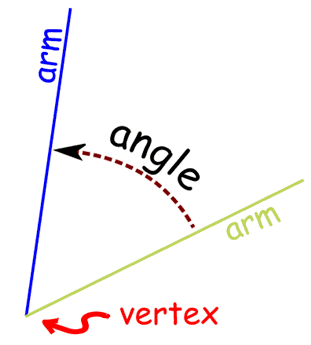
To practice descriptive geometry, you need a set of drawing tools. First, you need a compass (cyrkiel) to create circles and arcs. Another useful instrument is a set square (ekierka) that helps draw angles. For straight lines you may use a ruler (with measurements) or a straightedge (without measurements). To measure angles, circles and semicircles engineers make use of protractors.
Another key geometry expression you often ask about is a cross section (przekrój poprzeczny), here a cross section of a pistol, but I couldn't find an easy translation for "przekrój podłużny". Can you help me understand the difference by commenting?

To practice descriptive geometry, you need a set of drawing tools. First, you need a compass (cyrkiel) to create circles and arcs. Another useful instrument is a set square (ekierka) that helps draw angles. For straight lines you may use a ruler (with measurements) or a straightedge (without measurements). To measure angles, circles and semicircles engineers make use of protractors.


Another key geometry expression you often ask about is a cross section (przekrój poprzeczny), here a cross section of a pistol, but I couldn't find an easy translation for "przekrój podłużny". Can you help me understand the difference by commenting?

Tuesday, February 9, 2010
Machining processes
Teaching engineering English is a frustrating job for me because all too often I feel incompetent and it weakens my position as a language expert. For example, when we started a series of lessons on machining operations, I could hardly understand the difference between a milling machine (= frezarka) and a lathe (= tokarka) in Polish, so how could I teach it in English with any confidence?
Well, I try not to compete with you and always take your questions and doubts seriously. But sometimes I'm right. For example, Paweł and Sylwester disagreed with my definition of sanding (= szlifowanie) that is connected with the use of sandpaper to make surfaces smoother and suggested that it's actually a technology for cleaning buildings with a stream of sand (something you've seen at the ZAMEK Culture Centre in Poznań). In fact, the technique Paweł and Sylwester were talking about is called sandblasting (or abrasive blasting).
By the way, here's a definition for shearing which I can't translate into Polish. What the hell is it? Can anyone have a look?
Thursday, January 14, 2010
Loads of extras
I've accumulated a long list of expressions you asked for. Here it comes:
1) It's a pleasure to talk to S. He always talks to the point and is ready to share his expert knowledge. It's a pleasure, but it's not easy - he often needs technical details I don't know in English and, to make it worse, I don't understand in Polish. For example:
An important part of a heating pump is a heat exchanger (wymiennik ciepła) which requires careful material selection.
Heaters at home were once made of cast iron (żeliwo).
Hacksaw teeth are typically hardened by different kinds of heat treatment (obróbka termiczna).
One of the key machine tools used in cutting, sanding or deformation is a lathe
(tokarka). It's run by a lathe operator.
Another classic machine, used for shaping solid materials is a milling machine (frezarka).
Both machines are part of a general technical process known as machining (obróbka skrawaniem).
A popular agricultural machine used, among other things, to remove weeds or pulverize the soil is a cultivator (pielnik).
2) Three terms connected with avionics that slipped my mind when you asked me.
The aircraft's main body is a fuselage (kadłub), the ship's main body is a hull (kadłub statku).
A light, usually engineless aircraft is a glider (szybowiec), a vehicle which travels across different surfaces using a cushion of high-pressure air is a hovercraft (poduszkowiec)
Here's some information on Boeing 787 Dreamliner, which uses innovative materials for its fuselage and is exceptionally energy-efficient.
If you're interested in air transport, you might want to watch episodes of Aircrash Investigations in English.
3) A little bit of mathematics for R.
Here is a diagonal (przekątna).
1) It's a pleasure to talk to S. He always talks to the point and is ready to share his expert knowledge. It's a pleasure, but it's not easy - he often needs technical details I don't know in English and, to make it worse, I don't understand in Polish. For example:
An important part of a heating pump is a heat exchanger (wymiennik ciepła) which requires careful material selection.
Heaters at home were once made of cast iron (żeliwo).
Hacksaw teeth are typically hardened by different kinds of heat treatment (obróbka termiczna).
One of the key machine tools used in cutting, sanding or deformation is a lathe
(tokarka). It's run by a lathe operator.

Another classic machine, used for shaping solid materials is a milling machine (frezarka).
Both machines are part of a general technical process known as machining (obróbka skrawaniem).
A popular agricultural machine used, among other things, to remove weeds or pulverize the soil is a cultivator (pielnik).
2) Three terms connected with avionics that slipped my mind when you asked me.
The aircraft's main body is a fuselage (kadłub), the ship's main body is a hull (kadłub statku).
A light, usually engineless aircraft is a glider (szybowiec), a vehicle which travels across different surfaces using a cushion of high-pressure air is a hovercraft (poduszkowiec)
Here's some information on Boeing 787 Dreamliner, which uses innovative materials for its fuselage and is exceptionally energy-efficient.
If you're interested in air transport, you might want to watch episodes of Aircrash Investigations in English.
3) A little bit of mathematics for R.
Here is a diagonal (przekątna).
Thursday, December 10, 2009
Lots of questions
And again it was Paweł who asked a lot of questions. This is what he wanted:
1) a trench digger,
2) a potato washer or a mechanical washer,
3) pomiculture = sadownictwo
1) a trench digger,

2) a potato washer or a mechanical washer,

3) pomiculture = sadownictwo
Sunday, December 6, 2009
History of Debates
We had one or two e-mail exchanges before I set up the blog, so here's the summery for future reference:
1. Two ways of saying "usypywacz pryzm": a store loader and a bin piler.
2. The overrun brake explained here.
3. What connects a trailer (or any otehr load) with a vehicle is called a drawbaw.
1. Two ways of saying "usypywacz pryzm": a store loader and a bin piler.
2. The overrun brake explained here.
3. What connects a trailer (or any otehr load) with a vehicle is called a drawbaw.
Thursday, December 3, 2009
Slow down, you're fertilizing too fast
Since we talked about braking systems today, let me recommend this site on regenerative braking for you. There's plenty more on braking on HowStuffWorks, which is in my opinion one of the best websites that explain and popularize technology.
Pawcio couldn't find English words for "wrzucać na bieg jałowy", and neither could I in the lesson, but I ran it through Google tonight. I think the best answer is "to shift to neutral gear", but you may disagree. Another expression I found is "to idle your car", but you have to verify it for me. Two articles on idling your car are here and here.
Other things you may want to remember:
1. Styrofoam is good for thermal insulation.
2. Pottery can be made of clay.
3. Bricks are fired in a kiln (piec przemysłowy), metals are smelted in a blast furnace.
4. There are wooden planks and wooden beams.
Pawcio couldn't find English words for "wrzucać na bieg jałowy", and neither could I in the lesson, but I ran it through Google tonight. I think the best answer is "to shift to neutral gear", but you may disagree. Another expression I found is "to idle your car", but you have to verify it for me. Two articles on idling your car are here and here.
Other things you may want to remember:
1. Styrofoam is good for thermal insulation.
2. Pottery can be made of clay.

3. Bricks are fired in a kiln (piec przemysłowy), metals are smelted in a blast furnace.
4. There are wooden planks and wooden beams.


When a tyre is old
It wasn't even 5 minutes into the lesson about the properties of different engineering materials, like rubber or timber, when you started asking about technical terms I could hardly understand in Polish.
Marcin asked about "bieżnikowanie", which can extend the service life of a tyre by coating an old, worn tyre with new rubber and, of course, I couldn't answer that. I know now, after a quick run through Google, it's retreading, recapping or remoulding (in the UK). Here's a useful FAQ site on the basics of retreaded tyres, like their durability and reliability.
Another thing a lot of people wanted to talk about was oxidation, a process often confused with corrosion. From what I read here, corrosion is a more general process and oxidation can actually be seen as only a part of it. Am I right?
There was also some doubt about what "chassis" really means. We can argue about the best translation, but this is what Google Images returns for this search.
And finally, somebody wanted to know how to say "koks" in English. It's here, together with "węgiel kamienny", known as black coal.
Marcin asked about "bieżnikowanie", which can extend the service life of a tyre by coating an old, worn tyre with new rubber and, of course, I couldn't answer that. I know now, after a quick run through Google, it's retreading, recapping or remoulding (in the UK). Here's a useful FAQ site on the basics of retreaded tyres, like their durability and reliability.
Another thing a lot of people wanted to talk about was oxidation, a process often confused with corrosion. From what I read here, corrosion is a more general process and oxidation can actually be seen as only a part of it. Am I right?
There was also some doubt about what "chassis" really means. We can argue about the best translation, but this is what Google Images returns for this search.

And finally, somebody wanted to know how to say "koks" in English. It's here, together with "węgiel kamienny", known as black coal.
Subscribe to:
Posts (Atom)